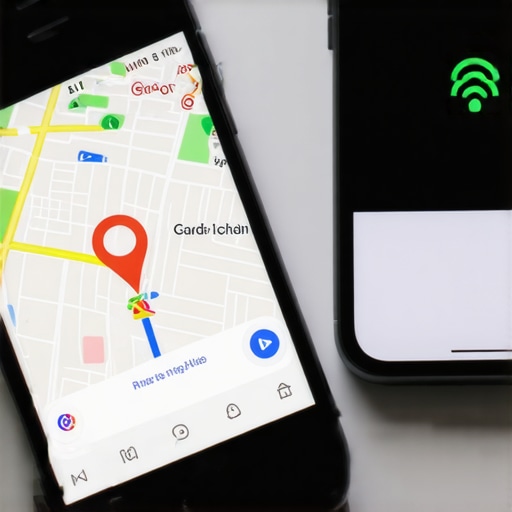
The Exact Reason Your Map Pin Isn’t Ringing the Phone (And How to Fix It)
You’ve seen the reports. Your dashboard shows thousands of impressions. Your “views” are up by 20% this month. You might even see your business sitting in the top three of the local pack for your primary keyword. But there is a deafening silence coming from your office phone. This is the “Views vs. Leads” paradox that plagues thousands of small business owners today. As a specialist in google business profile seo, I, Fahed Awan, see this daily. Business owners believe that the map pin is the destination, but in reality, it is merely the storefront window. If the window is dusty, the lights are off, and the “Open” sign is flickering, nobody is walking in.
The hard truth is that ranking is vanity; calls are sanity. Most local businesses stop at the bare minimum – verification – and wonder why their competitors with fewer reviews are getting all the high-ticket jobs. In this deep dive, we are going to bridge the gap between “visibility” and “conversion,” moving you from a passive observer of your profile to an active optimizer who uses behavioral signals and technical precision to drive actual revenue.
The Verification Myth: Why Being “Verified” Isn’t Enough
There is a dangerous misconception in the world of local marketing: the idea that once you receive that postcard from Google and enter the code, your job is done. Verification is not an optimization strategy; it is a permission slip. It simply confirms to Google that your business exists at a physical location. It does absolutely nothing to convince Google – or your customers – that you are the best choice for the job.
When we look at google business profile seo, research indicates that profile signals (the basic info you fill out during verification) make up only a small fraction of the overall ranking factors. While it’s the foundation, it is the interaction depth that actually moves the needle. Google’s algorithm has evolved. It no longer just asks, “Is this business real?” It now asks, “Is this business the most helpful solution for the user right now?”
If your profile is stagnant – meaning you haven’t updated photos in six months, you aren’t responding to reviews within 24 hours, and your Q&A section is a ghost town – Google views your business as “low-activity.” In the eyes of the algorithm, a low-activity business is a risky recommendation. To rank google business profile effectively, you must treat your profile like a living social media feed, not a static yellow-page listing. High-frequency updates signal to Google that you are open, active, and ready to serve customers, which is the first step in moving from a “view” to a “call.”
The Trinity of Local Ranking: Relevance, Distance, and Prominence
To understand why your phone isn’t ringing, you have to understand the “Trinity” that Google uses to sort the Map Pack. If you are missing even one of these pillars, your google business profile optimization efforts will fail.
- Relevance: This is how well your profile matches the intent of the searcher. If someone searches for “emergency water damage repair” and your profile only mentions “plumbing,” you lose. Relevance is built through meticulous category selection and the use of “justifications” – those small snippets of text Google pulls from your reviews or website to prove you do what the user is looking for.
- Distance (The Proximity Filter): This is the one factor you can’t fully control, but you can influence it. Google wants to show the closest results. However, if your local map pack seo is strong enough, you can “out-rank” proximity. We often see businesses three miles away beating businesses three blocks away because their prominence is significantly higher.
- Prominence: This is your digital “fame.” It’s a combination of your review count, your star rating, and your mentions across the web (citations).
Here is the reality check: in 2025 and 2026, a 4.5-star rating is no longer a competitive advantage; it is a baseline requirement. If you have a 4.2 and your competitor has a 4.8, the consumer’s brain makes a split-second decision before even reading a single word. To rank higher on google maps, you need to exceed the local average for review velocity – the speed at which you gain new reviews – not just the total count.
The Interaction Gap: Why Impressions Don’t Equal Leads
This is where most “experts” get it wrong. They focus on impressions. But an impression is just a set of eyeballs. If 1,000 people see your pin but only 2 people click it, your “Interaction Depth” is abysmal. Google tracks every single move a user makes on your profile. Do they click the “Call” button? Do they click “Directions”? Do they spend 30 seconds scrolling through your photos, or do they “pogo-stick” back to the search results immediately?
When a user clicks your profile and then immediately hits the back button to click a competitor, it tells Google that your profile was not a good match. This lowers your authority. To fix this, you need to Stop Counting Clicks and Start Getting Actual Calls From Your Business Profile. You do this by optimizing for “Micro-Conversions.”
Micro-conversions include things like “Photo Views.” Businesses with more than 100 photos receive 520% more direction requests than those with fewer. Why? Because photos build trust. Using local seo tools like SEO Viper Tools allows you to track these behavioral signals and see exactly where the drop-off is happening. If your photos are high-quality and showcase your team, your equipment, and your finished work, users stay on your profile longer. This “dwell time” is a massive ranking signal that most businesses completely ignore.
Technical Killers: Schema Errors and Service Area Geometries
Sometimes the reason the phone isn’t ringing is purely technical. I often encounter the “Invisible Radius Error.” This happens when a service-based business (like a roofer or plumber) sets their service area incorrectly in the Google Business Profile dashboard. If you select too wide an area without the supporting “local signals” on your website, Google may penalize your visibility across the entire region because it doesn’t believe you can actually serve that 50-mile radius.
Furthermore, your website and your Map profile must speak the same language. This is where The Schema Script That Tells Google Exactly Where Your Trucks Go comes into play. Local Business Schema is a piece of code on your website that tells Google’s spiders exactly which neighborhoods you serve, your exact coordinates, and your service offerings. Without this, Google has to “guess” your service area based on your address, which is often insufficient for modern gmb ranking service standards.
If you are a service area business (SAB) without a physical storefront, you are already at a disadvantage. You must compensate for this by having hyper-local landing pages for every major suburb you serve. Each of these pages should be linked to your profile via Google Posts to create a “Geographic Relevance Loop.” This technical precision is what separates the top 1% of earners from the rest of the pack.
2026 Trends: The Future of Google Maps SEO
As we look toward 2026, the landscape of google business profile seo is shifting toward AI-driven trust filters and “Satellite Sync” accuracy. Google is increasingly using AI to verify that a business is actually where it says it is. They are cross-referencing street view images with your uploaded photos. If your profile says you are a massive plumbing warehouse but your street view shows a residential mailbox, you will face a “Trust Gap” that no amount of keywords can fix.
We are also seeing the rise of “In-car OS maps.” As more people use Android Auto and Apple CarPlay, the way they search for local services is changing. They use voice search intent, which is much more conversational. Instead of searching “dentist near me,” they say, “Find a dentist open now that takes Cigna insurance.” If your profile doesn’t have these specific attributes (like insurance accepted or specific hours) filled out, you won’t even appear in the voice search results. To stay ahead, you must implement the 7 Crucial Google Business Profile Adjustments for 2026, which focus heavily on attribute depth and AI-readiness.
Another emerging hurdle is the “Satellite Sync Error,” where GPS discrepancies in high-density urban areas can lead customers to the wrong entrance or even the wrong building. Optimizing your “Access Point” in the Google Maps dashboard is becoming a vital part of ensuring that a “direction request” actually results in a customer walking through your door.
Troubleshooting Your Stagnant Map Pin (Step-by-Step)
If your phone has stopped ringing, don’t panic. Use this checklist to rank google business profile assets effectively and find the leak in your conversion funnel:
- Audit Your Categories: Your primary category carries about 75% of the ranking weight. Ensure it is your most profitable service, not just a general term. Check your secondary categories to ensure they don’t conflict with your primary one.
- Check NAP Consistency: Does your Name, Address, and Phone number match exactly across your website, Facebook, Yelp, and the BBB? Even a “St.” vs “Street” discrepancy can cause a minor trust drop.
- Analyze Review Velocity: Use a google maps rank tracker to see how fast your competitors are getting reviews. If they get 5 a week and you get 1 a month, you are slowly sinking.
- Visual Audit: Look at your profile on a mobile device. Is the first image a picture of your building or a boring logo? People want to see people. Replace your logo with a high-quality photo of your team in action to increase google business profile visibility and trust.
- Update Your Q&A: Don’t wait for customers to ask questions. Post your own frequently asked questions and answer them yourself. This is prime real estate for keywords and for overcoming sales objections before the call even happens.
By using professional local seo software, you can see a “heat map” of your rankings. If you rank #1 at your office but #10 two miles away, you have a proximity and prominence issue that needs to be addressed with local citations and geo-tagged content.
Conclusion: Moving Beyond the Map Pin
Dominating the local market in 2025 and beyond requires more than just a verified pin on a map. It requires a blend of technical google business profile seo, psychological triggers, and a deep understanding of how Google’s AI interprets human behavior. If your impressions are high but your phone is silent, your map pin is a ghost – it exists, but it has no substance.
You must bridge the interaction gap by providing the trust signals, photos, and technical schema that both Google and your customers crave. Don’t let your competitors steal the leads that should be yours. Whether you choose to use advanced local seo software or consult with a google maps ranking service, the time to act is now. Your map pin should be your most productive salesperson. If it isn’t, it’s time to fix the machine.
If you’re ready to stop guessing and start growing, reach out to a google business profile consultant who can turn your stagnant profile into a lead-generation powerhouse. Your business deserves to be seen – and more importantly, it deserves to be called.