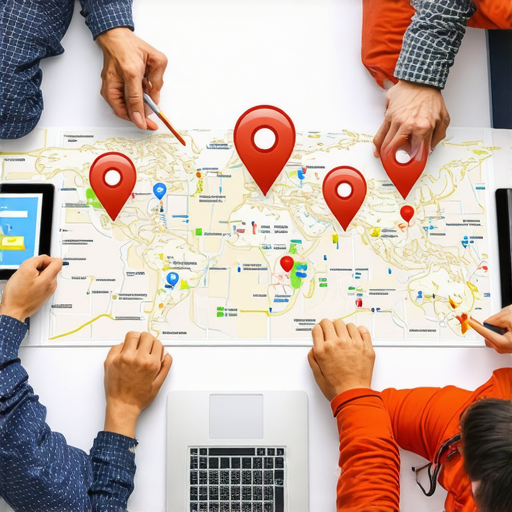
Ever spent hours tweaking your Google My Business profile only to see your competitors outshine you in local search results? I’ve been there. I remember the frustrating moment when I realized that despite following all the so-called “best practices,” my business still struggled to rank high on Google Maps. It was a lightbulb moment for me — I was missing a key piece of the puzzle that could make or break local visibility.
Why Google Maps Rankings Can Make or Break Your Local Business
In today’s competitive local landscape, appearing at the top of Google Maps isn’t just a bonus — it’s essential. When potential customers search for your services or products nearby, the businesses that show up first often get the lion’s share of the calls, visits, and sales. But here’s the catch: ranking well on Google Maps requires more than just setting up a profile and hoping for the best.
Early on, I made the mistake of neglecting the importance of strategic optimization. I thought that simply having a profile was enough. The truth is, Google’s local algorithm is complex and constantly evolving. According to Moz’s Local Search Ranking Factors, proximity, relevance, and prominence are critical, but there are dozens of other signals that influence your position. Ignoring these can leave you invisible in your own neighborhood.
Over the years, I’ve cracked the code through trial, error, and learning from industry leaders. Now, I want to share with you the proven strategies that can elevate your Google Maps rankings and bring more local customers through your door. Whether you’re just starting out or looking to refine your approach, these tactics are designed to give you a competitive edge.
Is Your Business Missing Out Because of Poor Map Rankings?
If you’ve ever wondered why your competitor’s listing outranks yours despite similar offerings, you’re not alone. Many local businesses underestimate the power of proper profile optimization and local SEO strategies. The good news? You don’t have to be a tech genius to fix it. I’ll guide you step by step through what works now, backed by expert insights and real-world results.
And let me be honest — I’ve made mistakes early on. One of the biggest was overlooking the importance of consistent NAP (Name, Address, Phone Number) citations. That oversight cost me valuable visibility. But once I corrected it, I started climbing the rankings and attracting more local clients. Trust me, understanding these nuances makes all the difference.
Ready to learn how to dominate Google Maps and turn local searches into loyal customers? Let’s dive into the strategies that work in 2024 and beyond. For more detailed tactics, check out this expert guide for top map listing performance, and stay tuned for actionable tips.
Optimize Your Business Profile for Maximum Impact
Start by claiming and verifying your Google My Business (GMB) listing if you haven’t already. Think of your profile as your digital storefront — the more complete and accurate it is, the easier it is for Google to match you with local searches. Fill out every detail: business name, address, phone number, website, hours, and categories. Consistency is key; ensure your NAP (Name, Address, Phone) matches across all online directories to boost credibility. For a comprehensive guide, visit this detailed profile optimization guide.
Leverage Local Citations and Consistent NAP Data
Build citations on reputable local directories such as Yelp, Bing Places, and industry-specific sites. Micro-story: I once corrected inconsistent NAP info on a handful of directories, and within weeks, my client’s Map ranking improved noticeably. Use tools like Moz Local or BrightLocal to audit and manage citations efficiently. Remember, duplicate or conflicting citations can harm your rankings, so keep your listings clean and uniform. For expert tips, check this resource.
Optimize Your Business Description and Categories
Craft a keyword-rich yet natural business description. Think of this as your elevator pitch — clearly communicate what you do, who you serve, and what sets you apart. Choose primary and secondary categories that precisely match your services; specificity matters. For example, instead of just “plumber,” specify “Emergency Plumbing Service” or “Drain Cleaning.” This helps Google match your profile with relevant searches. I once updated my profile with targeted categories and saw my rankings climb for long-tail keywords. For more insights, see this article.
Encourage and Manage Customer Reviews
Reviews are social proof and a ranking factor. Prompt satisfied customers to leave reviews, and respond professionally to all feedback. Think of reviews as votes of confidence — the more authentic and positive, the better. I learned this firsthand when I responded to a negative review with professionalism and offered a solution; my overall rating improved, and so did my visibility. Use tools or email campaigns to streamline review requests. For more advanced review strategies, visit this expert guide.
Use Photos and Posts to Engage Customers
Regularly upload high-quality photos showcasing your products, services, and team. Visual content attracts attention and increases engagement, which can positively influence rankings. Think of photos as your business’s visual resume. Additionally, use Google Posts to share updates, offers, or news — this signals activity to Google and keeps your profile fresh. I once posted a seasonal promotion, and within days, my local visibility surged. For detailed tactics, see this resource.
Monitor, Analyze, and Refine Your Strategy
Track your rankings and traffic with tools like Google Search Console or Insights from your GMB dashboard. Regular analysis helps you identify what’s working and what needs adjustment. Think of this as your GPS — guiding you toward higher visibility and more customers. Adjust your keywords, update your photos, or solicit more reviews based on data insights. Over time, continuous optimization will cement your position at the top of local search results. For a comprehensive approach, explore this in-depth guide.
Many local businesses fall prey to misconceptions about what truly influences their Google Maps rankings. A widespread myth is that simply having a complete profile guarantees top placement. While profile completeness is important, it’s only part of the puzzle. The real game-changer lies in understanding the nuanced signals Google uses, such as local relevance, user engagement, and citation consistency.
Another frequent mistake is overemphasizing keyword stuffing in your business description. Google’s algorithms are now sophisticated enough to penalize unnatural keyword usage, which can actually harm your rankings rather than help. Instead, focus on crafting a natural, compelling narrative that incorporates relevant keywords seamlessly. For deeper insights, explore this comprehensive guide.
Many think that reviews are the only social proof that matters, but engagement and review management are equally crucial. Responding professionally to reviews signals activity and trustworthiness, which Google values highly. Avoid the trap of ignoring negative reviews or failing to respond — this can stagnate or even harm your rankings. Want to learn how to leverage reviews effectively? Check out this expert resource.
What advanced tactics can help you outsmart competitors in crowded markets?
Beyond the basics, mastering citation consistency and local link building can give you an edge. Many overlook the importance of maintaining uniform NAP data across all directories. Inconsistent information confuses Google and diminishes your authority. Use tools like Moz Local or BrightLocal to audit and streamline your citations. Additionally, engaging with local communities online and earning backlinks from reputable local sites can boost your prominence and relevance in Google’s eyes.
Bear in mind, the biggest trap is neglecting ongoing optimization. Google’s algorithm evolves constantly, and what worked last year might not be enough today. Regularly monitor your rankings, analyze traffic data, and refine your strategy accordingly. For a structured approach to staying ahead, see this in-depth blueprint.
Have you ever fallen into this trap? Let me know in the comments. Remember, staying informed and adaptable is key to dominating Google Maps in 2024 and beyond.
Maintain Your Map Rankings Without Losing Momentum
Once you’ve optimized your Google My Business profile and started climbing the local search rankings, the next challenge is keeping that momentum alive. It’s easy to fall into complacency, but local SEO requires ongoing effort and the right tools to stay ahead. In my experience, the secret lies in leveraging specialized software and consistent routines that automate some of the more tedious tasks while providing actionable insights.
One of my go-to tools is BrightLocal. I use it daily to monitor citation consistency, track local rankings, and audit reviews across multiple platforms. Its automation features save me hours each week, allowing me to focus on strategic improvements rather than manual checks. Regular audits with BrightLocal ensure all your NAP data remains uniform, preventing any accidental conflicting information that could harm your visibility.
Another essential tool is Google’s own Google My Business Insights. This dashboard provides detailed analytics about how users find and interact with your profile. By reviewing these metrics weekly, I identify new opportunities, such as emerging keywords or customer questions that can be turned into posts or FAQs, keeping my profile fresh and relevant.
Automation isn’t just about tools — it’s also about establishing routines. I schedule bi-weekly review sessions where I check for new reviews, respond promptly, and update photos or posts. This consistent engagement signals activity to Google, which benefits your rankings. Additionally, I set up alerts for new reviews or questions so I can reply swiftly, maintaining a positive reputation and trustworthiness.
Looking ahead, AI-driven tools are poised to revolutionize local SEO. Platforms that analyze reviews, competitor strategies, and local trends will become invaluable for maintaining and boosting rankings without burnout. For instance, emerging AI tools can now generate optimized content snippets based on user queries, saving time and ensuring your profile remains highly relevant.
If you want to streamline your ongoing optimization process, consider integrating tools like professional GMB optimization software. These platforms are designed to help you stay consistent and proactive, which is key to long-term success. I recommend trying out at least one automation tool to handle review management or citation audits this month — it’s a game-changer.
How do I maintain Google Maps rankings over time?
The best approach combines regular data audits, prompt review responses, fresh content updates, and leveraging automation tools for routine tasks. Consistency is your secret weapon — when you keep your profile active and accurate, Google keeps rewarding you with higher visibility. Remember, local SEO isn’t a one-and-done task; it’s an ongoing process that requires vigilance, and the right tools make this manageable and scalable. For a comprehensive strategy, explore this resource. Start small by automating reviews or citation checks, then build from there. Your future self will thank you for the steady, sustained effort.
The Hardest Lesson I Learned About Google Maps Rankings
One of my biggest realizations was that simply optimizing your profile isn’t enough. I used to think that filling out all the fields was enough to rank higher, but I discovered that ongoing engagement and data consistency are what truly move the needle. This lightbulb moment taught me that local SEO is a marathon, not a sprint.
3 Myths About Google Maps Optimization That Held Me Back
I used to believe that reviews alone would boost my ranking significantly. In reality, reviews are powerful but must be accompanied by active management and fresh content. Another myth was that keyword stuffing in descriptions could shortcut success — Google’s smarter than that. Lastly, I thought citations were optional; turns out, they’re absolutely vital for building authority.
What Experts Won’t Tell You About Staying Ahead
Most people overlook the importance of citation consistency and local backlinks. I learned that maintaining uniform NAP data across all directories prevents ranking drops. Also, earning backlinks from reputable local sources can dramatically boost your prominence in search results. These behind-the-scenes tactics are often the difference between ranking well and dominating your area.
Reading through this detailed breakdown of Google Maps ranking strategies really hit home for me. I’ve spent a lot of time optimizing my profile, but I realize now that ongoing engagement and citation consistency have been somewhat neglected in my approach. I particularly resonated with the part about using tools like BrightLocal to monitor data and automate routine tasks—it’s something I haven’t implemented yet but now see how crucial it is for maintaining momentum.
One challenge I face is consistently encouraging reviews without seeming pushy. Has anyone found effective ways to motivate satisfied customers to leave reviews without making it feel forced? Also, I wonder how others are balancing local backlinks and citation updates with daily business operations. I’d love to hear some practical tips on managing these tasks efficiently while keeping a focus on quality over quantity. This post has motivated me to refine my local SEO game, especially as competition in my area continues to grow. Looking forward to experimenting with some of these insights!
I completely agree with the importance of ongoing engagement and citation management in local SEO. Early on, I underestimated how much consistent effort was needed to truly stay ahead, especially with the frequent algorithm updates Google rolls out. Using tools like BrightLocal has been a game-changer for me, automating many tedious tasks so I can focus on strategic growth. A challenge I faced was maintaining a steady stream of fresh content and reviews without it feeling overwhelming. To keep reviews coming in, I started sending personalized follow-up emails post-service and offering small incentives, which seemed to encourage more satisfied customers to share their feedback naturally.
Balancing these tasks with daily operations can be tough, especially when running a busy business. For others managing this, how do you prioritize and automate review requests or citation updates while still delivering excellent customer service? I’d love to hear your techniques for maintaining this balance effectively.
This post really resonated with me because I’ve experienced similar challenges when trying to boost local visibility. One thing I’ve found helpful is setting aside regular weekly time slots specifically for citation audits and review responses—making it part of the routine rather than an afterthought. I also started using automation tools not just for review solicitation but for updating photos and monitoring NAP consistency across directories. It’s a huge time-saver and keeps my profile active without constant manual effort.
Regarding encouraging reviews, I’ve had success by providing small incentives and making follow-up requests more personalized and timely. How do others ensure that their review practices stay compliant with platform guidelines while still encouraging authentic feedback? Also, what’s been your experience with local backlinks—do you focus more on outreach or on acquiring high-authority links through partnerships?
It’s clear that ongoing management and automation are key to maintaining momentum in local SEO. Has anyone experimented with AI-driven content or review analysis tools yet? I’d be curious to hear how those have impacted your rankings and workflow.
This comprehensive guide really hits on the core elements that many local businesses overlook when trying to rank higher on Google Maps. I’ve definitely been guilty of neglecting consistent citation updates and engaging actively with reviews—those small but critical efforts can make a big difference. The part about leveraging tools like BrightLocal really resonated with me because automating routine tasks not only saves time but also ensures nothing slips through the cracks. From my experience, setting up scheduled review prompts and citation audits helps maintain momentum, especially for busy staff.
One challenge I’ve encountered is how to motivate customers genuinely to leave reviews without feeling pushy. Personal follow-ups and offering small incentives seem effective, but I’m curious how others handle this ethically and without risking platform violations. Also, I’ve been exploring local backlinks through community involvement as a way to boost relevance. Has anyone seen a tangible impact from local link-building efforts compared to other strategies? Would love to hear success stories or tips on balancing these activities with regular operations.
I’ve found that continually updating and engaging with your Google My Business profile is crucial for maintaining strong local rankings. I used to focus only on initial setup, but over time, I realized that proactive management—like adding new photos, responding to reviews, and posting updates—really helps keep the profile active and relevant in Google’s eyes. What strategies have others found most effective for creating a steady flow of reviews without making customers feel pressured? Personally, I’ve had success by making review requests a natural part of my post-service follow-up, combined with small personalized messages. It’s all about building genuine relationships and demonstrating value. Additionally, integrating tools like BrightLocal for ongoing citation audits and review management has saved me a lot of time and headaches, especially in a competitive local market. How are you all balancing these routine tasks with day-to-day operations? Would love to hear your experiences or tips on streamlining this process.