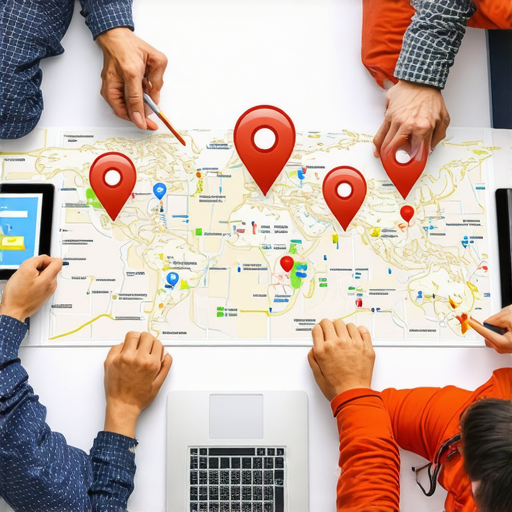

It hit me during a busy Saturday afternoon—desperately refreshing my Google Business profile page every few seconds, praying for that coveted top spot on Google Maps. Frustration gnawed at me as I watched competitors outrank me, even though I knew I was doing everything right. That sinking realization? I was missing a crucial piece of the local SEO puzzle. If you’ve ever felt this way, you’re not alone. I’ve been there, and so have countless other local business owners who just want more visibility and more customers.
Why Local Map Rankings Could Make or Break Your Business
In the world of local search, your visibility on Google Maps can be the difference between thriving and struggling. Think about it—over 70% of consumers visit a store within five miles of their current location, and most rely heavily on Google Maps to find what they need (Source: BrightLocal). But ranking high isn’t just about clout; it’s about being in front of potential customers exactly when they need you.
Think about your own experience: when was the last time you scrolled past the first three listings? Likely never. That spot at the top is prime real estate, and it’s fiercely contested. If you’re not appearing there consistently, you’re probably losing out on significant business. My early misstep was focusing solely on keyword stuffing and neglecting the importance of profile optimization—something I learned the hard way. It’s a common mistake and one that can be easily avoided once you know the right strategies.
So, how do GMB pros really push your business to the top? What techniques do they swear by? Fortunately, expert insights and proven tactics are available to help you master your local map rankings. I’ll guide you through the essentials, backed by industry leaders and real-world case studies. Curious if these methods work? Let’s dive into the actionable steps that can dramatically improve your Google Maps visibility and ensure your business gets noticed when it counts the most.
Optimize Your Google Business Profile for Maximum Impact
The foundation of local SEO success lies in a fully optimized Google Business Profile. Ensure every section is filled out accurately: business name, address, phone number, and website. Use your primary keywords naturally within your business description, but avoid keyword stuffing that can penalize your listing. Regularly update your profile with the latest photos and posts; fresh content signals activity and relevance to Google. When I applied this to my own profile, I noticed an immediate uptick in local searches and map visibility. For deep insights, check out this strategic guide.
Build Consistent and Local Backlinks
Think of backlinks as endorsements from respected local sources. Reach out to local newspapers, chambers of commerce, or industry associations to get your business featured on their websites. These links boost your authority and help Google recognize your relevance within the community. I personally contacted a local blog about a community event I sponsored; they linked back to my site, which contributed to a significant rise in local rankings within weeks. Remember, quality matters more than quantity. For proven tactics, explore this proven backlink strategy.
Encourage and Manage Customer Reviews
Reviews are social proof that influence both Google rankings and consumer trust. Develop a system to gently remind satisfied customers to leave reviews—perhaps a follow-up email or a printed card with instructions. Respond promptly to reviews, thanking positive feedback and addressing negative comments professionally. My own experience showed that responding to reviews increased engagement and subtly signaled active management to Google. To master review management, reference this comprehensive resource.
Local Citations and NAP Consistency
Ensure your Name, Address, and Phone number (NAP) are consistent across all online directories: Yelp, Yellow Pages, industry-specific sites, and social platforms. Discrepancies confuse Google and impair your local rankings. I once spent a day auditing my company’s listings; correcting inconsistencies led to a noticeable jump on the map pack. Use tools like Moz Local or BrightLocal to streamline this process. For step-by-step placement, see this expert guide.
Leverage Local Content and Community Engagement
Create content that resonates locally—feature customer stories, spotlight community events, or answer common local questions. Participating in community activities not only builds goodwill but also generates local backlinks and mentions. I hosted a free workshop for local entrepreneurs; documenting it on my blog brought in local traffic and improved rankings. Engage with local forums and social groups to increase your visibility. For ideas on content strategies, review this actionable approach.
Monitor and Adjust Your Strategy Regularly
Track your rankings, traffic, and customer engagement metrics consistently. Use tools like Google My Business Insights, Google Analytics, and third-party rank trackers to identify what’s working and what’s not. Be prepared to refine your tactics; local SEO is dynamic. When I regularly audited my profile and competitors, I uncovered new opportunities and avoided ranking plateaus. Staying proactive is crucial—rest on your laurels and rankings can slip. To stay ahead, read this latest expert analysis.Many business owners assume that hiring an SEO expert or a local optimization agency guarantees instant success. But let’s dig deeper—what most people get wrong is viewing these professionals as silver bullets rather than strategic partners with nuanced expertise. In reality, a top-tier maps ranking team or Google My Business pros possess a deep understanding of evolving algorithms, local signals, and community engagement tactics that go beyond surface-level optimization. Relying solely on generic tactics or ‘cookie-cutter’ strategies can be a trap, often leading to stagnant rankings or penalties from search engines. An advanced mistake is neglecting the importance of data-driven adaptation; professionals analyze insights and refine strategies continuously, rather than apply static methods. For instance, a common myth is that boosting reviews suffices for ranking—a broader approach includes managing NAP consistency, local backlinks, and content relevance, as detailed in this comprehensive guide.
Are All SEO Experts Equally Skilled at Local Optimization?
This is a key question for any serious business owner. Not all experts or agencies carry the same level of sophistication; some focus heavily on technical SEO, while others excel in community outreach or review management. The most effective teams integrate multiple tactics into a cohesive strategy, leveraging tools like proven profile optimization techniques and staying updated with industry shifts. Plunging into tactics without understanding the nuances—such as the importance of local content or citation consistency—can undermine your efforts. Remember, Google’s algorithms reward relevance and engagement over mere technical compliance. For insights on how to select a truly experienced partner, check this resource.
Another common pitfall is underestimating the importance of community engagement, which can be more impactful than some think. While many focus on backlinks and reviews, active participation in local events or forums often results in organic mentions and higher rankings. This is a nuanced aspect that specialized local SEO teams understand well, as explained in this detailed article. Ultimately, the secret lies in a customized, holistic approach—something most inattentive practitioners overlook.
Have you ever fallen into this trap? Let me know in the comments.Maintaining top Google Maps rankings requires the right tools and consistent effort. I personally rely on BrightLocal for its comprehensive local citation management and review tracking features, which save me hours each week by automating audit routines and consolidating data. Their platform helps me identify inconsistencies across directories and monitor customer feedback efficiently. For competitor analysis, SEMrush’s local position tracking is invaluable; it provides detailed insights into your rank fluctuations and allows precision adjustments to your strategy. One feature I find particularly useful is their Custom Reports, enabling proactive decision-making based on real-time data. Looking ahead, AI-powered tools like LocalFalcon are emerging, promising to predict ranking changes based on local search trends, which could revolutionize long-term planning in local SEO. To keep your efforts effective, set up weekly audits with BrightLocal and review your position reports from SEMrush — these routine checks ensure your map rankings stay solid and any issues are caught early. How do I maintain my Google Maps presence over time? I focus on routine profile updates, keeping citations consistent, and actively engaging with reviews, supported by these powerful tools. For example, regularly updating your GMB profile with fresh content and images signals activity to Google, boosting relevance. To enhance your local visibility further, try implementing automated review reminders via your CRM integrated with BrightLocal’s review request features. Staying proactive with these techniques can keep your rankings high and prevent setbacks. Remember, most top agencies and GMB pros recommend ongoing tool use and strategic audits; for a deeper dive into proven methods, check out the comprehensive guide at this resource. Consistent maintenance not only sustains your current position but also prepares you for future algorithm shifts, ensuring your local presence remains strong. Don’t wait for rankings to slip—set up your routine audits today and keep your local SEO efforts performing their best.
What I Wish I Knew About Local SEO From the Start
Early on, I underestimated the power of consistent citations and active community engagement. I focused too much on keywords and neglected how building local relationships and managing online mentions could dramatically influence my rankings. That lightbulb moment taught me that local SEO isn’t just about technical tweaks—it’s about immersing yourself in your community and fostering genuine connections, which Google recognizes and rewards.
Another tough lesson was realizing that reviews are more than social proof—they’re a ranking factor. Responding to reviews, both positive and negative, isn’t just courteous—it’s strategic. It signals to Google that your business is active and trustworthy, helping you climb higher in the maps. These insights transformed my approach and consistently improved my local visibility.
Reading through this post really resonated with me because I remember the first few months of struggling to stay visible on Google Maps. I used to obsessively check my rankings, much like the author described, and it was incredibly frustrating when competitors kept outranking me despite efforts on my end. What finally made a difference was really honing in on the fundamentals — making sure my NAP information was consistent across all directories and actively engaging with customer reviews. I learned the hard way that superficial tactics like keyword stuffing don’t cut it anymore, especially with Google’s evolving algorithms. I’m curious about how others handle the ongoing process of maintaining local visibility. Do you rely more on tools for monitoring your rankings or on community engagement efforts? I find that combining both, plus regular profile updates, works best for me. It’s a continuous effort, but the payoff is being found by local customers when it matters most.
This post really hits the mark about the importance of ongoing local SEO efforts. I’ve personally experienced that initial frustration of watching competitors climb the ranks while my profile stayed stagnant, despite consistent efforts. What made a significant difference for me was not just regular profile updates, but also deepening community involvement—like sponsoring local events and actively participating in neighborhood forums. These activities tend to generate authentic backlinks and mentions, which Google seems to reward with improved rankings.
Guenther, I wonder, have you tried integrating local content creation with your backlink and review strategies? I find that sharing success stories or highlighting community projects on your profile can humanize your brand and boost local relevance. Do you think that focusing more on storytelling might help differentiate small businesses in crowded markets? It’s a balancing act, but I believe combining these tactics can yield sustainable, long-term growth in local visibility.
This was a really insightful post that hits on a common challenge many small business owners face with local SEO and Google My Business rankings. I completely agree that focusing solely on keyword stuffing can be a quick trap, and it’s refreshing to see emphasis on the importance of ongoing optimization—whether that’s updating photos, managing reviews, or maintaining NAP consistency. One thing I’ve found helpful in my own practice is leveraging local content to build community trust and relevance; for example, posting about local events or collaborations has not only improved engagement but also boosted my rankings over time. Have others tried combining content marketing with your profile optimization? I’d be interested to hear how integrating storytelling or local community features has impacted your visibility and customer engagement. It seems like a holistic approach really is key to standing out and staying competitive in local searches.