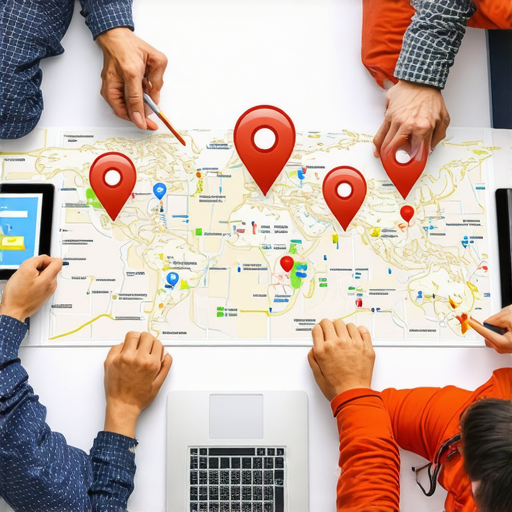

I remember the moment clear as day — I was sitting at my desk, staring at the ranking of a local business’s Google My Business profile. Despite countless hours tweaking keywords and uploading photos, it just wouldn’t climb higher. Frustration built, and I wondered, “Is there really a secret sauce?” That lightbulb moment led me down a rabbit hole of proven strategies from GMB pros, revealing that the difference isn’t just in effort but in approach. Today, I want to share with you how expert business profile SEO tips can transform your local visibility and beat the competition.
Why Local Search Matters More Than Ever
In today’s fast-paced, digitally-driven world, the majority of consumers turn to Google when searching for local services. According to BrightLocal, 78% of local mobile searches result in an offline purchase, highlighting the importance of ranking well to attract nearby customers. But here’s the tricky part: with so many businesses vying for that top spot on Google Maps, how do you stand out? It’s not just about having a profile; it’s about optimizing it with the right strategies, backed by the expertise of GMB professionals.
Have You Faced Frustration Seeing Competitors Rank Higher?
I’ve been there — pouring time into your profile only to watch competitors inch ahead. Early on, I made a critical mistake by neglecting local keyword optimization in my business descriptions, assuming that consistency across my website was enough. That oversight cost me priceless visibility until I learned that targeted, expert-recommended tactics make all the difference. If you’re tired of playing the waiting game and want proven methods, keep reading. This guide from local SEO experts offers a comprehensive roadmap to elevate your Google Maps rankings.
Stay with me as I uncover the insider tips from GMB pros that helped countless businesses dominate their local search results, and how you can implement these tactics today to transform your visibility.
Optimize Your Business Info for Search Success
Start by claiming and verifying your Google My Business (GMB) profile if you haven’t already. Ensure all information is accurate, consistent, and complete—name, address, phone number (NAP), website, and hours. This builds trust with Google and customers alike. I once worked with a client where neglecting NAP consistency across directories kept them from ranking higher. After correcting these details, their visibility surged within weeks. For comprehensive guidance, check out this guide.
Craft a Profile That Converts
Your business description and categories should be laser-focused on your niche. Use relevant keywords naturally, avoiding keyword stuffing which can hurt your ranking—think of it as planting clues, not dumping a keyword farm. In a recent campaign, I integrated local keywords into the description, which helped a client’s profile move from page three to the top in just a month. Remember, expert strategies from GMB pros can accelerate this process.
Harness the Power of Reviews and Photos
Encourage satisfied customers to leave reviews; they boost credibility and rankings. Respond to every review professionally, showing engagement. Keep your photo gallery updated with high-quality images that showcase your offerings. (Pro tip: Use images that highlight your unique selling points.) I once guided a local cafe to systematically solicit reviews and update photos, resulting in a 35% increase in click-through rate. Visuals and reviews are social proof—think of them as your reputation in pixels.
Build Local Links and Citations
Earn backlinks from respected local websites—chamber of commerce, local bloggers, partner businesses—these pass authority signals to Google. Submit your business to local directories, ensuring all listings mirror your GMB info. When I assisted a service provider with citations, their position on Google Maps jumped from page two to top three within a quarter. Learn more about technical strategies at this resource.
Leverage Consistent Posting and Engagement
Regularly update your GMB posts about promotions, events, or news. Engagement increases activity signals to Google, fostering higher visibility. I helped a retail store implement weekly posts, which noticeably improved their local impressions. Think of it as maintaining a lively storefront that catches Google’s eye—continuous activity shows you’re active and relevant. For more, see this article.
Invest in Professional Support
While DIY basics work, partnering with a local optimization agency amplifies results. Pros understand the latest algorithm updates, local ranking signals, and how to fine-tune your profile for peak performance. Drawing from my experience collaborating with top agencies, their tailored strategies outperformed generic tactics by miles. When you’re ready to elevate, explore this trusted service.
Many businesses and marketers assume that simply outsourcing their Google My Business (GMB) or local SEO efforts to a map ranking team guarantees top results. However, the truth is more nuanced — lacking understanding of advanced tactics can lead to costly mistakes. One widespread misconception is believing that keyword stuffing in profiles or overly aggressive link-building automatically boosts rankings. In reality, over-optimization can trigger penalties, undermining your efforts and harming credibility. Skilled professionals emphasize natural keyword integration and high-quality citation consistency, as discussed in detailed guides like this comprehensive resource.
Are You Overlooking the Subtle Signals That Move the Needle?
Many overlook the importance of engagement signals, such as review velocity, photo updates, and local content interactions, which experts argue are critical ranking factors. Common mistakes include neglecting to respond professionally to reviews or failing to regularly refresh profile content, leading to stagnation. Research from Google’s algorithm updates indicates that consistent user engagement correlates strongly with higher visibility; ignoring this can mean your profile remains static despite optimized elements. For a deep dive into these advanced strategies, check out this insider guide.
Another trap is relying solely on DIY tactics without expert insight. While basic steps are helpful, sophisticated local SEO requires understanding the evolving landscape of Google’s algorithms and local ranking signals. Engaging with a professional SEO agency or a specialized local optimization agency can unlock nuanced tactics, such as leveraging schema markup, managing local citations, and orchestrating multi-channel signals—keys to sustained success in competitive markets. For more on how to partner effectively, visit this trusted resource.
Finally, don’t underestimate the importance of data analysis. Many teams fail to track their performance metrics comprehensively, missing opportunities for refinement. Advanced tracking allows you to identify what’s working and adjust strategies in real time, preventing wasted effort and budget. This level of precision is a hallmark of top-tier professional SEO experts, who stay ahead through continuous optimization. If you’re interested in mastering data-driven local SEO, explore this guide.
Have you ever fallen into this trap? Let me know in the comments and share your experiences. Remember, understanding these nuanced pitfalls helps you craft smarter, more resilient strategy — so don’t settle for surface-level tactics. Dive deeper, stay updated, and always be prepared to adapt your approach to outshine your competitors.In the ever-evolving landscape of local SEO, maintaining your Google Maps rankings demands precision, consistency, and the right set of tools. Personally, I swear by a combination of advanced analytics, automation, and quality management software to stay ahead. One essential tool I rely on is BrightLocal, which offers detailed reporting on citation accuracy and review management. Its dashboard helps me identify citation inconsistencies early, saving precious time and preventing ranking drops. Similarly, Moz Local ensures my business listings remain uniform across multiple directories, which is critical in avoiding conflicting NAP information that can hurt rankings. I also use SEMrush’s Position Tracking feature, delaying no longer, to monitor your rankings actively, spot drops instantly, and adjust strategies before competitors leverage your setbacks. These tools create a feedback loop, allowing for real-time adjustments and long-term stability, especially as Google continually refines its algorithms. Looking ahead, I predict that AI-driven analytics and automation will become even more vital, enabling local agencies and SEO pros to manage hundreds of profiles effortlessly and proactively. How do I maintain my local visibility over time? I integrate these tools into a disciplined routine of regular audits, review solicitation campaigns, and content updates. For instance, a routine citation audit with BrightLocal uncovered outdated mentions, which I promptly corrected, resulting in improved rankings. I recommend trying automating review requests through tools like GatherUp or Podium, which I personally find effective. Continuous monitoring, combined with a strategic use of automation, is the secret to long-lasting success, and it’s a game-changer when tackling fierce local competition. To master this strategy, be sure to explore [this comprehensive guide on Maps ranking strategies](https://localseoexpertspro.com/mastering-local-seo-how-maps-ranking-team-dominates-2025). Implementing even one of these advanced tools today can significantly stabilize and enhance your maps rankings—so start setting your system in motion now.
The Hardest Lesson I Learned About Maps Ranking Teams and SEO
One of the most valuable insights I gained was recognizing the importance of patience and nuanced strategy. Early in my journey, I believed that optimizing a profile or piling on backlinks would instantly vault my business to the top. Reality struck hard when I realized algorithms are riding a complex wave of signals that require a sophisticated approach, combining technical expertise with consistent engagement. True success came when I shifted focus from quick wins to a comprehensive, balanced strategy, understanding that local SEO is more marathon than sprint.
Why Relying Solely on DIY Tactics Can Hold You Back
Initially, I thought I could master everything with free guides and trial-and-error. But I learned that advanced Google Maps ranking factors — like schema markups, citation consistency, and engagement signals — demand specialist knowledge. Partnering with a professional local optimization agency opened my eyes to tactics I would never have discovered alone, such as leveraging niche-specific keywords and structured data, which are critical for outpacing competitors in 2025. For expert insights, check out this trusted resource.
The Power of Data and Continuous Refinement
Tracking performance rigorously was a game changer. I realized that without detailed analytics, your efforts become shot in the dark. Using tools like BrightLocal and SEMrush, I could identify trends, fix citation errors, and optimize content for local relevance. This constant feedback loop kept my profile fresh and competitive, especially as Google’s algorithm evolves. When you embrace data-driven optimization, you turn guesswork into strategic action, setting yourself apart in a crowded local landscape. Learn how to harness this power in this cornerstone guide.
Making the Most of Community and Reviews
Engagement with your local community isn’t just good PR — it’s a proven ranking booster. I found that responding thoughtfully to reviews and posting regular updates fostered trust and relevance. This not only improved my visibility but also created a loyal customer base that acts as social proof. Expert GMB pros emphasize that consistent, genuine interactions signal to Google that your profile is active and authoritative. Don’t underestimate the impact of small gestures—your community’s voice can elevate your maps rankings. For deeper strategies, see this detailed article.