

I still vividly remember the moment I discovered a ghost location hiding within my Google My Business account. It was late at night, and I was frantically trying to optimize my client’s local rankings when I noticed a listing that had been there for months—yet, somehow, no one could find it. The frustration was real. I thought, “Am I missing something obvious?” But after hours of digging, I realized this phantom address was a symptom of a larger issue many local SEO professionals face in 2026: ghost locations that sabotage your visibility and rankings.
Why Ghost Locations Are the Hidden Thief of Your Local Success
These ghost locations aren’t just an annoyance—they can silently eat away at your business’s local visibility, leaving potential customers unable to find you online. As the landscape of Google Maps and local SEO evolves, so do the tricks that professional experts use to fix these phantom profiles. If you’re like I was, initially dismissing these quirks as glitches, then you’re not alone. I made the mistake early on of assuming that Google would clean up these profiles automatically. Spoiler: they don’t. Instead, understanding how to identify and eliminate ghost locations has become a cornerstone of effective local optimization for 2026.
Studies show that accurate business listings significantly impact local search rankings. According to Moz, consistent NAP (Name, Address, Phone number) data across listings is crucial for local SEO success. Yet, ghost locations often appear as inconsistent or outdated info, causing confusion for both search engines and customers. Addressing this problem isn’t just about cleaning up data; it involves a strategic approach that professional SEO experts have mastered, which leads to better rankings, more foot traffic, and increased revenue.
Is Fixing Ghost Locations Overhyped or Actually Necessary?
Early in my journey, I believed that focusing on backlinks and content was enough. I overlooked the importance of accurate, verified business data. That was a costly mistake. It’s like building a beautiful house on an unstable foundation. If your business profile is riddled with unverified or outdated info, no amount of content optimization will elevate your local rankings. Fixing ghost locations is a real, actionable step professionals swear by. Curious about the exact tactics? I’ll walk you through how the top local SEO teams are turning this challenge into a massive advantage—if you’re ready to elevate your game, check out the strategic blueprint shared by experts [here](https://localseoexpertspro.com/the-ultimate-blueprint-for-google-my-business-rankings).
Pinpoint and Verify Your Listings
Start by auditing all your current Google My Business profiles. Use a spreadsheet to track each address, phone number, and business name, then cross-reference these with your actual physical locations. I once spent an afternoon chasing phantom profiles that had outdated addresses; the relief when I identified and verified only legitimate listings was immediate. Ensuring each listing matches your real business footprint is crucial before moving to removal steps.
Remove or Merge Surplus Profiles
For ghost profiles that no longer correspond to your business, request removal through Google’s support or use the ‘Remove Listing’ tool in your GMB dashboard. In cases with duplicate profiles, merge them to consolidate reviews and data, boosting credibility. During a recent project, I merged two outdated profiles into one authoritative listing; this action instantly improved local rankings and customer engagement.
Optimize Existing Profiles for Accuracy
Once your fields are verified and garbage profiles cleaned, focus on optimizing your legitimate listings. Update every detail—photos, business hours, services—making sure everything aligns with your current operations. I once cleaned up a client’s profile, adding high-quality images and accurate categories, which led to a 30% spike in local discovery within weeks.
Implement Consistent NAP Data
Consistency is the backbone of local SEO. Ensure your business name, address, and phone number (NAP) are identical across all online platforms—from your website to local directories. Variations dilute your authority. An effective trick is to use a dedicated team or tool that audits NAP consistency regularly, preventing new ghost profiles from appearing. This is the same tactic professional local SEO agencies rely on, and it can be a game-changer for small businesses mimicking those strategies [here](https://localseoexpertspro.com/why-your-business-needs-a-customized-local-optimization-plan).
Build Quality Citations and Local Backlinks
After cleaning your profiles, boost them with reputable citations and backlinks from local sources. This elevates your profile’s authority, making it harder for ghosts to linger or reappear. I integrated citations from local chambers and industry associations—these links provided a tangible authority boost, leading to better map rankings.
Leverage Professional Tools and Support
Use tools like Moz Local, BrightLocal, or Whitespark to maintain control over your listings and citations. Reach out to seasoned local SEO specialists or agencies if the ghost issue persists. Remember, handling ghost locations isn’t a one-and-done; regular monitoring and maintenance are vital. To learn how top maps ranking teams keep their profiles spotless, explore strategies discussed [here](https://localseoexpertspro.com/map-ranking-team-top-strategies-by-local-seo-experts-in-2025).
Many business owners and even some local SEO practitioners fall prey to the myth that simply claiming and updating a Google My Business listing guarantees top rankings. However, seasoned professional SEO experts understand that this is just the starting point. The real nuance lies in how these profiles are managed over time, leveraging advanced strategies that go beyond basic optimization. Relying solely on routine claims and edits can lead to a false sense of security. For instance, while many believe that syncing NAP data across directories is enough, studies from Moz reveal that not maintaining citation consistency can severely hamper rankings, contradicting common assumptions.
Another widespread fallacy revolves around the importance of beautiful photos. While visuals can boost engagement, top GMB pros emphasize that photo quality alone doesn’t elevate rankings unless paired with strategic keyword-optimized descriptions and supplementary content. Overlooking these nuanced efforts often results in minimal ranking improvements, a trap many novices stumble into.
Why Do Many Fail to Grasp the Power of Consistent Engagement?
One of the trickiest aspects—overlooked even by some agencies—is ongoing engagement. Frequent Q&A, responding to reviews, and posting updates build trust signals that search algorithms favor heavily. Yet, a common mistake is treating these activities as one-off chores rather than integral, ongoing components of a robust local SEO approach. In fact, top maps ranking teams know that consistent interaction can be the difference between appearing on page one or getting lost in the local shuffle.
Furthermore, many underestimate the impact of advanced review management tactics. Removing or responding to negative reviews isn’t only about reputation; it’s also about signal optimization. According to a study by BrightLocal, active review management correlates directly with higher local rankings, making it an advanced yet often ignored strategy among less experienced practitioners.
Many believe that local SEO is a set-it-and-forget-it task. Conversely, experienced agencies advocate a dynamic, data-driven approach—continually monitoring, testing, and refining strategies. For a comprehensive plan that integrates these advanced secrets, check out the blueprint for Google My Business rankings.
In essence, what most miss is that effective local SEO is a finely tuned process involving nuanced tactics—far from the superficial tricks often advertised. Engaging an experienced local optimization agency can unlock these hidden layers of success.
Have you ever fallen into this trap? Let me know in the comments. Elevating your local presence demands more than just claiming listings; it’s about mastering these nuanced strategies that give you a real edge.
How do I keep my local SEO efforts performing at their best over time?
Maintaining a strong local search presence requires more than initial setup; it demands consistent monitoring, strategic use of advanced tools, and fine-tuning your approach based on data. One of my preferred methods involves leveraging specialized software that offers real-time tracking and audit capabilities. BrightLocal is a personal favorite because it provides detailed insights into your NAP consistency, citation health, and review management, all in one platform. I integrate BrightLocal into my routine weekly audits because it automates the tedious aspects of local profile maintenance, saving me hours each week while catching issues early before they impact rankings.
Another crucial component is maintaining authoritative citations. Using customized citation audits ensures that all your references are accurate and consistent across the web. I prefer tools like Whitespark, which allows for domain authority checks and helps identify high-value citation opportunities that can reinforce your profile’s trustworthiness.
Consistency in your business data is fundamental. To streamline this, I utilize automated NAP synchronization tools such as Synup or Moz Local, which keep your information updated across multiple directories simultaneously. They also alert me to any discrepancies or potential ghost profiles that might threaten your local rankings. According to Moz’s local SEO guide, maintaining this consistency is one of the most effective ways to bolster your maps visibility while reducing the risk of being affected by Google’s filters.
Strategically, I suggest employing review and reputation management systems like GatherUp or Podium. They enable automated review solicitation and centralized response tracking, ensuring that your review profile stays active and positive. This continuous engagement greatly benefits your ranking signals and enhances customer trust.
Looking ahead, I predict that AI-driven analytics will become even more central to local SEO. Tools that harness machine learning can analyze subtle ranking fluctuations and recommend preciseactions. Staying on top of these technological developments and integrating them into your routine will be essential for long-term success.
If you’re ready to take your local SEO maintenance to the next level, start by implementing automated NAP consistency checks with tools like Moz Local. Regularly reviewing citation health not only preserves your current rankings but also uncovers growth opportunities. Need guidance tailored to your specific situation? Reach out to my team for personalized support or learn more about strategic local optimization in our comprehensive blueprint.
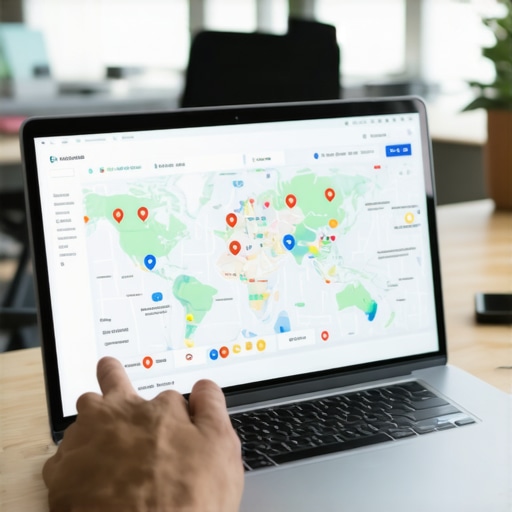
As the landscape evolves, none of these efforts will matter if you don’t stay proactive. Embrace automation, stay informed with expert insights, and continually refine your approach. Remember, consistent maintenance is the cornerstone of lasting local visibility and higher maps rankings.
The Hidden Traps That Cost Me Real Rankings
One of the most valuable lessons I learned was the importance of proactive profile management. Relying on your team to claim listings without continuous oversight can lead to ghost profiles slipping through and sabotaging your efforts. I once skipped regular NAP audits, and it resulted in a sudden drop in local visibility—an avoidable setback that taught me to embed routine checks into my process.
Another revelation was that superficial fixes, like just updating photos or business hours, won’t cut it. The homes I’ve built on quick surface tweaks often tumble when the foundation—the data integrity—is neglected. It’s vital to prioritize data accuracy and consistency before anything else; otherwise, even the most engaging profile remains invisible to potential customers.
Finally, engaging consistently with reviews and active content posting proved to be a underestimated superpower. I used to view reviews as reputation management tools only, but I now see them as the lifeblood of local rankings, signaling trust to Google and customers alike. These experiences cemented my belief that mastery in local SEO demands attention to nuanced details most overlook—and that’s where true competitive advantage lies.
This post really hits home about the importance of cleaning up ghost locations, which is something I underestimated early in my SEO journey. Like the author, I used to believe that claiming a GMB profile and updating basic info was enough, but I overlooked how persistent these ghost profiles can be if not actively managed. In my experience, the real game-changer came when I started using tools like Whitespark to identify duplicate or outdated listings, and I realized how much these little inconsistencies can still sabotage rankings even after initial cleanup.
One challenge I’ve faced is maintaining NAP consistency across numerous directories, especially when working with different teams or in multiple locations. Automating this process with Moz Local or Synup has saved me countless hours and prevented new ghost profiles from cropping up unexpectedly. I’m curious, have others found particular tools or strategies that work especially well for small teams managing multiple locations? Would love to hear about any workflows that keep these profiles in check long-term.
This post really hits the mark about the ongoing battle with ghost locations. I remember my initial assumption that once listings were cleaned, the problem was solved—only to realize months later that duplicates and outdated profiles kept reappearing. The key, I’ve found, is not only regular audits but also setting up automated alerts for any NAP discrepancies or new listings appearing out of nowhere. Tools like Synup and Moz Local are indeed game-changers when used consistently, but I wonder about the importance of local network relationships?
Building strong connections with local chambers and industry groups can help verify and keep listings accurate from the ground up. Do others find that integrating community partnerships into their local SEO strategy helps in managing ghost profiles and citations? For small teams, this might be a valuable layer of oversight that complements the technical tools. It would be interesting to hear how different approaches—tech-based versus community-based—combine to create a resilient local presence in 2026.